Genome Mining of Novel Enzymes and Bioactives from Termite Gut Microbes
DIPI SRG Project
APPLY POSITION (Part-Time RA)
Project Description
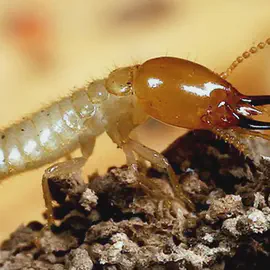
Termites are a diverse group of insects that play a crucial role in decomposing lignocellulosic material from dead plants, such as leaves and wood. Their ability to utilize cellulose, the most abundant organic matter on earth, contributes to their widespread ecological success. This capability is largely due to lignocellulolytic enzymes obtained through a symbiotic relationship with various microbes in the termite gut. The lignocellulose-rich diet of termites requires a symbiotic environment containing a diverse array of microbes that intricately interact to fulfill their ecological roles. This complex interaction likely involves many bioactive compounds with various roles in communication, host-signaling, and competition. Our study aims to extend the genomic information from our previous collection of isolated termite gut bacteria by sequencing and analyzing their genomes to uncover novel genetic elements and pathways involved in lignocellulolytic activity and bioactive compound production. This information can be combined with existing datasets to search for novel enzymes and bioactives with applications in biotechnology and medicine.
Using Partitioned Pangenome Graph to find novel enyzmes and bioactives from Bacillus velezensis
One of the strains we managed to sequence identifies as Bacillus velezensis, a talented microbe that is being highlighted for its potential use as Plant Growth Promoting Rhizobacteria (PGPR), where it also shows high amylolytic activity. We are currently exploring the use of partitioned pangenome graph to highlight how our isolate (BSR3) differs from other velezensis strain out there, in order to find novel enzymes and bioactives from this strain.
Part-Time Research Assistant (Bioinformatics) Recruitment
We are inviting students and freshgraduate to work with us as a Part-Time Research Assistant (RA) or Student Assistant (SA) working on this project.
As a RA/SA, you will be able to choose in working on problems such as:
- Updating and maintaining our bioinformatic tool to perform large scale genome mining analysis (BGCFlow)
- Refining our approach in building and exploring Bacillus velezensis partitioned pangenome graph from over 500 whole genome sequences.
- Using machine learning approaches to predict CAZYmes activity from the unique pan-enzyme families found in the pangenome of Bacillus velezensis.
Requirements:
- Freshgraduate or final year students (must take no more than 12 SKS in current semester) in Bioinformatics, Biology, Biotechnology, or related fields.
- Able to commit 15-20 hours per week for a period of 3-5 months with incentives of 1.500.000 - 2.000.000 IDR/month
- Proficient with
UNIXenvironment andPythonfor data analysis or software engineering - Knowledge or experience in this topics is an advantage but not a must:
Git,Snakemake, network analysis withGephiorCytoScape, Machine Learning
Project Timeline
- Application Deadline: 20 February 2026
- Shortlisting & Review: 21-22 February 2026
- Interview & Technical Discussion: 23-25 February 2026
- Project Start: ~2 March 2026
- Project Duration: 4-6 months
If you are interested, please prepare:
- A short motivation statement
- Your CV or brief academic profile
- Academic transcript
- Bioinformatic Portfolio (GitHub, projects, website, or relevant work in the form of scientific manuscripts or posters – if available)
And upload it using the form:
- 📧 Application Form
- 🗓️ Deadline: 20 February 2026
Even if you are unsure whether you fully meet the requirements, we encourage you to apply. We appreciate candidates with strong motivation and willingness to learn.
Acknowledgements
This project is funded by the Indonesian Science Fund (DIPI) Small Research Grant 2024, in collaboration with the Universitas Gadjah Mada iGEM community.